
Business Growth, Digital Marketing, Digital Transformation, MiKi Infosys
Why Customers Visit Your Business Online but Don’t Buy — 10 Ways to Turn Enquiries into Sales
Oct
A practical guide for business owners to build trust, improve customer experience and convert more enquiries into paying customers.
Introduction
Have you ever wondered why people visit your website, view your social media posts, enquire about your products or services — but never make a purchase?
Many business owners believe they need more followers, more advertisements or more website visitors to increase sales. However, the real problem may not be a lack of traffic. It could be a lack of trust, unclear pricing, slow responses or a complicated buying process.
In today’s competitive digital market, attracting customers is only the first step. The real challenge is converting their interest into enquiries, purchases and long-term relationships.
In this article, MiKi Infosys explains 10 practical ways to turn potential customers into paying customers using simple business improvements and digital tools.
1. Build Trust Before Asking Customers to Buy
Customers rarely purchase from a business they don’t trust, especially when they are discovering it for the first time.
Before making a decision, potential customers may look for:
- A professional website.
- Genuine customer reviews.
- Clear business contact information.
- Real product or service photographs.
- Examples of previous work.
- Transparent pricing and terms.
- Consistent business information across platforms.
What you can do: Review your website and social media profiles from a customer’s perspective. Ask yourself: “If I were seeing this business for the first time, would I feel comfortable spending my money here?”
Improve any details that appear confusing, outdated or incomplete.
2. Make Your Offer Easy to Understand
Customers should not have to work hard to understand what you sell.
For example, instead of writing:
“We provide complete digital solutions for businesses.”
Use a clearer message:
“We help small businesses build professional websites, generate online enquiries and improve their digital presence.”
Your offer should communicate three things:
- What do you provide?
- Who is it for?
- How does it help the customer?
If you sell products, clearly explain the product’s features, benefits, price, delivery details and return policy where applicable.
Business lesson: When customers understand your offer quickly, they can make decisions more confidently.
3. Respond to Enquiries Faster
Imagine a customer contacts three businesses for the same service. One replies within minutes, another responds several hours later, and the third never replies.
The first business has an opportunity to start the conversation while the customer’s interest is still strong.
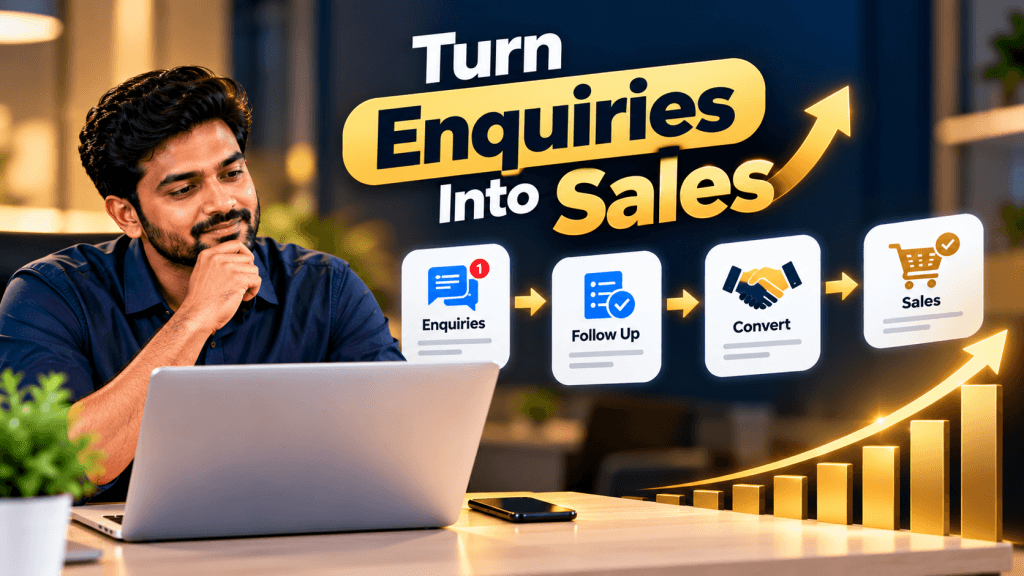
Create a simple enquiry management process:
- Record every enquiry.
- Acknowledge receipt promptly.
- Assign the enquiry to a responsible person.
- Respond with relevant information.
- Schedule a follow-up if necessary.
- Record the final outcome.
You can use a spreadsheet, CRM system or an automation workflow to manage this process.
AI can also help classify incoming messages and draft responses, but important quotations and commitments should be checked before sending.
4. Don’t Hide Important Pricing Information
When customers cannot understand your pricing, they may leave without enquiring.
You don’t necessarily need to publish every price. Some services require a customised quotation. However, you should explain what influences the cost.
For example, a website development company might show:
- Basic website packages.
- Features included in each package.
- Optional services and additional costs.
- Estimated project timelines.
- The process for requesting a customised quotation.
This helps potential customers understand whether your offer fits their requirements and budget.
Practical tip: If you cannot publish a fixed price, provide a clear “Request a Quote” option and explain what information the customer should submit.
5. Improve Your Website’s Mobile Experience
Many potential customers discover businesses through mobile search, social media and messaging apps.
If your website loads slowly, displays poorly on mobile devices or makes contact difficult, you may lose interested visitors.
Check these essential elements:
- Does the website work properly on mobile?
- Can visitors understand your main offer immediately?
- Are product images and descriptions clear?
- Is the contact or enquiry button easy to find?
- Do forms work correctly?
- Are payment and checkout steps straightforward?
- Does the website use HTTPS?
Test your website regularly, especially after installing plugins, changing themes or adding new features.
You can use Google PageSpeed Insights to assess performance and identify potential improvements.
6. Use Customer Reviews to Reduce Doubts
Reviews help prospective customers understand other people’s experiences with your business.
Ask genuine customers for honest feedback after completing a purchase or service. Make the process simple by sharing your review link or sending a polite request.
You can also showcase authentic testimonials and case studies on your website, with appropriate customer permission.
Avoid buying fake reviews, writing fabricated testimonials or offering incentives in exchange for positive reviews. These practices can damage trust and violate platform policies.
Remember: A few detailed, genuine reviews can be more useful to potential customers than a large number of suspicious or meaningless ratings.
7. Follow Up Without Becoming Annoying
Not every customer is ready to purchase during the first conversation. Some need time to compare options, obtain approval or arrange their budget.
A professional follow-up can help you continue the conversation.
For example:
First follow-up: Ask whether the customer needs additional information.
Second follow-up: Address a relevant question or clarify the proposed solution.
Final follow-up: Politely ask whether they would like to proceed or close the enquiry for now.
Keep messages useful, respectful and appropriately spaced. Follow applicable consent requirements and communication platform rules.
A simple CRM or task reminder can help your team remember follow-ups without repeatedly contacting the same person.
8. Show Customers Why Your Business Is Different
If your business looks exactly like every competitor, customers may choose based only on price.
Instead, identify your genuine strengths.
Your difference might be:
- Specialised industry knowledge.
- Better product quality.
- Personalised service.
- Reliable after-sales support.
- Convenient delivery.
- Transparent pricing.
- Faster turnaround times.
- A clearly defined service process.
Explain these strengths with real examples rather than vague claims such as “best quality” or “number one service.”
For a service business, a short case study showing the customer’s problem, your solution and the verified outcome can communicate value more effectively than a generic advertisement.
9. Use Digital Marketing to Attract the Right Customers
More traffic does not automatically mean more sales.
If your advertising reaches people who are unlikely to need your product or service, your marketing budget may be wasted.
Before running a campaign, define:
- Your ideal customer.
- The problem your offer solves.
- The geographical area you serve.
- The campaign objective.
- Your budget.
- The action you want people to take.
Use suitable channels for your audience. Local businesses may benefit from a complete Google Business Profile, local search visibility and genuine reviews. Other businesses may need search advertising, social media campaigns, industry-specific content or referral marketing.
Measure relevant outcomes such as qualified enquiries, purchases and cost per acquired customer rather than relying only on likes and impressions.
10. Measure Where You Lose Customers
One of the most useful improvements a business owner can make is identifying where potential customers stop progressing.
Consider this illustrative monthly example:
| Sales stage | Number of people |
|---|---|
| Website visitors | 1,000 |
| Enquiries received | 50 |
| Qualified enquiries | 30 |
| Quotations sent | 20 |
| Customers acquired | 5 |
These figures are hypothetical and are not industry benchmarks.
In this example, 50 people made enquiries, but only five became customers. The business could investigate whether its quotations are competitive, whether the follow-up process is effective, or whether prospects need more information before deciding.
Track the same stages every month to identify patterns.
Useful measurements include:
- Website visitor-to-enquiry rate.
- Enquiry response time.
- Qualified lead rate.
- Quotation-to-sale rate.
- Customer acquisition cost.
- Repeat purchase rate.
- Revenue generated by each marketing channel.
Don’t change everything at once. Identify one weak stage, test an improvement and compare the results.
A Simple 7-Day Action Plan for Business Owners
You don’t need a large marketing budget to start improving conversions.
Day 1 — Review your online presence
Check your website, social media pages, Google Business Profile and contact information.
Day 2 — Improve your offer
Make your services, products, benefits and pricing information easier to understand.
Day 3 — Test your enquiry process
Submit a test enquiry and check how long it takes to receive a response.
Day 4 — Collect customer feedback
Ask recent customers for honest reviews and identify common questions or concerns.
Day 5 — Fix one website problem
Improve a confusing page, broken form, unclear call to action or mobile usability issue.
Day 6 — Organise follow-ups
Create a lead tracking sheet or configure a suitable CRM workflow.
Day 7 — Review the numbers
Record enquiries, qualified leads, quotations and sales. Decide which issue to improve next.
Conclusion
Growing a business online is not simply about attracting more visitors. It is about helping the right customers understand your offer, trust your business and take the next step.
A professional digital presence, clear pricing, faster responses, genuine reviews, convenient buying processes and consistent follow-ups can all contribute to better sales performance.
Start by identifying where potential customers are dropping out of your sales process. Fix the most important problem first, measure the results and keep improving.
MiKi Infosys helps businesses build a stronger digital presence through website development, digital marketing, social media management, branding and AI-powered automation.
If your business is attracting attention but struggling to convert enquiries into customers, improving your digital strategy and customer journey is a practical place to start.
MiKi Infosys — Your Business. Digitally Better.
Website: https://www.mikiinfosys.xyz
